
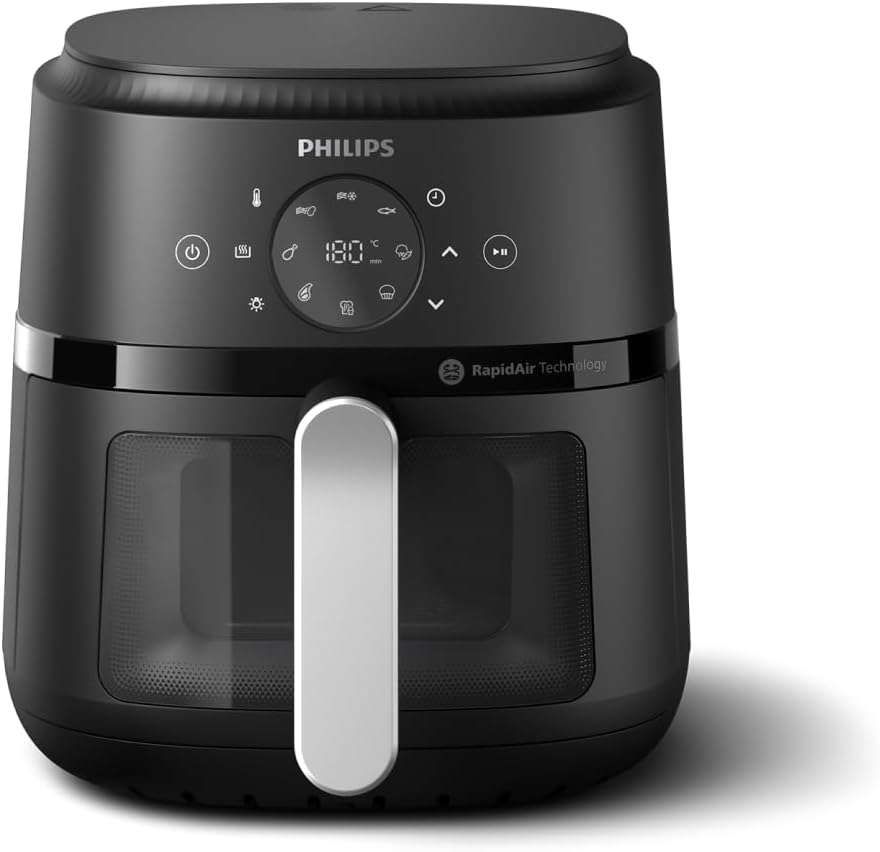
Are you curious whether the Philips Air Fryer 2000 Series – 13-in-1 functions, 6.6 Quarts, Compact Design with Cooking Window, Black, (NA231/00) is the small machine that will change the way your kitchen behaves?

First impressions and what you’ll feel when you unbox it
When you lift the box and feel the weight of this compact appliance, there’s a suggestion of restraint — small, efficient, not theatrical. You’ll notice the black finish, the modest footprint, and that little promise of a cooking window, which feels like a polite invitation to keep one eye on things without constantly opening a door.
Design and build quality
The exterior is modestly elegant; in the way it sits on your counter it tends neither to dominate nor to hide. Philips has given it a compact design that seems meant to be useful where space is limited: it won’t crowd your countertop, and it appears assembled with pragmatic economy. You’ll find the lines clean, the interface flush, and the overall impression more utilitarian than luxurious — which, for many kitchens, is the right kind of promise.
The cooking window and how it changes your rhythm
That cooking window does more than let light in. It alters your relationship with the food: you watch without interrupting, like looking through a small window into a room where something is happening. You’ll catch the moment when edges turn to crisp and color deepens, and you’ll appreciate not having to lift a lid and lose heat. The window makes the process less furtive and more deliberate.
Performance: what it does to food and what you can expect
This is an air fryer that speaks plainly about its intent: to cook with less oil and still produce satisfying crusts and caramelized edges. You will expect crisp exteriors and tender interiors — and in many cases, you’ll get them. The machine’s mode of achieving this is called RapidAir Technology, a phrase that sounds brisk and efficient, and which translates to accelerated hot air circulation and a design intended to optimize airflow.
RapidAir Technology and the starfish bottom design
Philips describes a unique starfish bottom design; it’s not a catchphrase but an engineered pattern to direct hot air. You’ll notice faster, more even results than you might from a generic convection oven and, compared with shallow tray baking, a markedly crisper finish. The technology is designed to circulate heat around food so that you don’t need a lot of oil to get that textured surface you enjoy.
How it handles different textures
If you’re aiming for a golden, crunchy exterior on fries or the glossy crackle on roasted vegetables, the 2000 Series generally delivers. Very wet batters or delicate pastries might test its limits, but for breaded chicken, roasted root vegetables, and reheated pizza slices, it provides an efficiency and evenness that makes you question why you ever used a deep fryer. You’ll find a balance between speed and patience: it cooks quickly without making everything uniformly dry.
This image is property of Amazon.com.

Modes, presets, and control: how you tell it what to do
You’re not left adrift with one knob and a vague sense of time. The touchscreen control offers nine presets for common tasks — frozen fries, fresh fries, chicken, meat, fish, breakfast, vegetables, cake, and keep warm — and still allows manual setting of time and temperature. This hybrid approach gives you both guidance and freedom; you can trust presets when you’re busy and tweak settings when you want specificity.
Touchscreen control and preset usefulness
The touchscreen is responsive and simple to learn. The presets are useful starting points; they reduce the guessing and standardize results if you want repeatable success for familiar dishes. You’ll find that presets remove a layer of friction from everyday cooking: you press, you confirm, and the machine proceeds without the need for constant monitoring.
Manual control for experimentation
When you want to push the machine a little further — crisping a thin-skinned fish without overcooking, or slow-roasting a small joint — manual time and temperature settings offer the detail you’ll appreciate. The control range is broad enough for most domestic experiments, and the tactile satisfaction of adjusting time and temperature is part of the ritual of learning a new kitchen companion.
Capacity and what fits in that 6.6 quarts pan
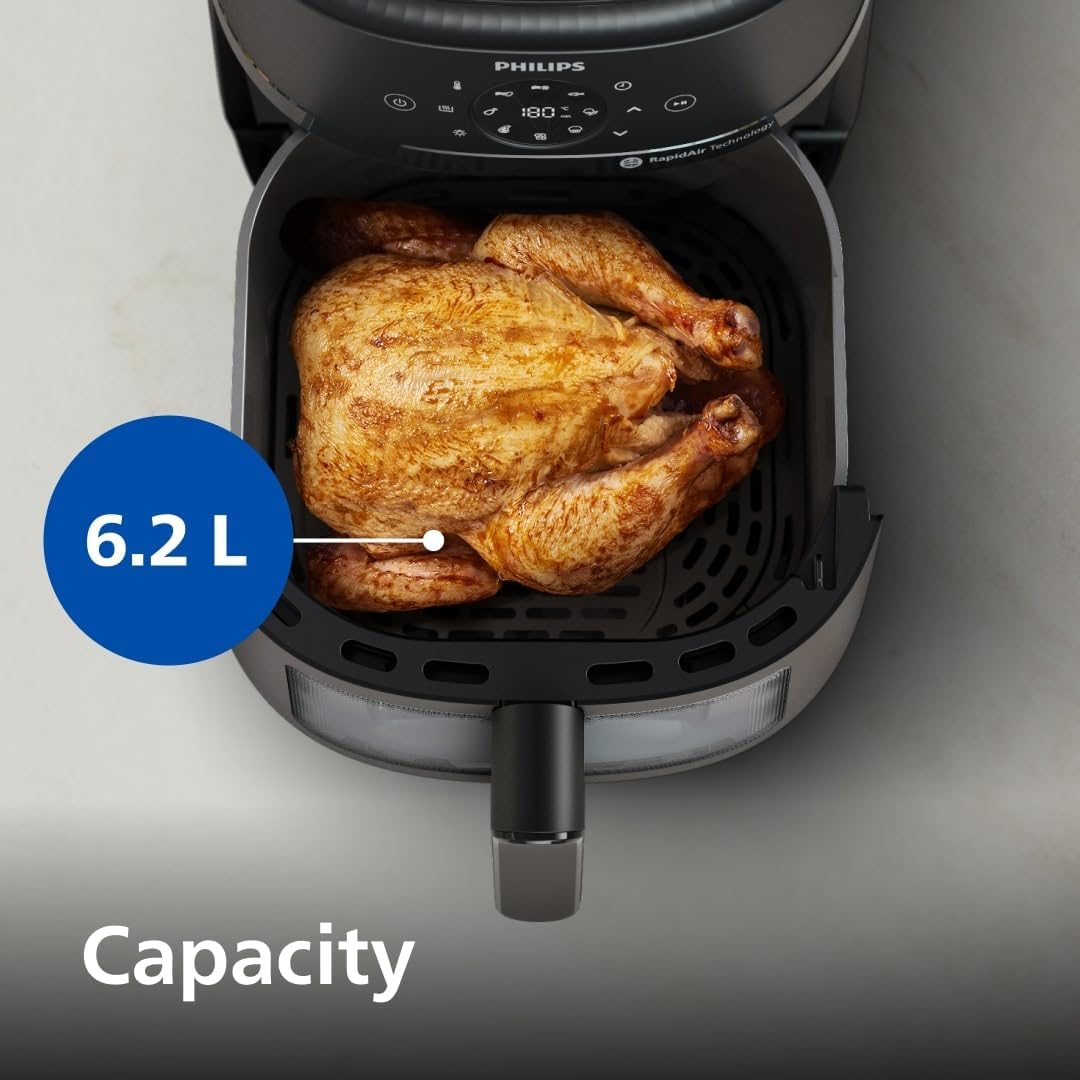
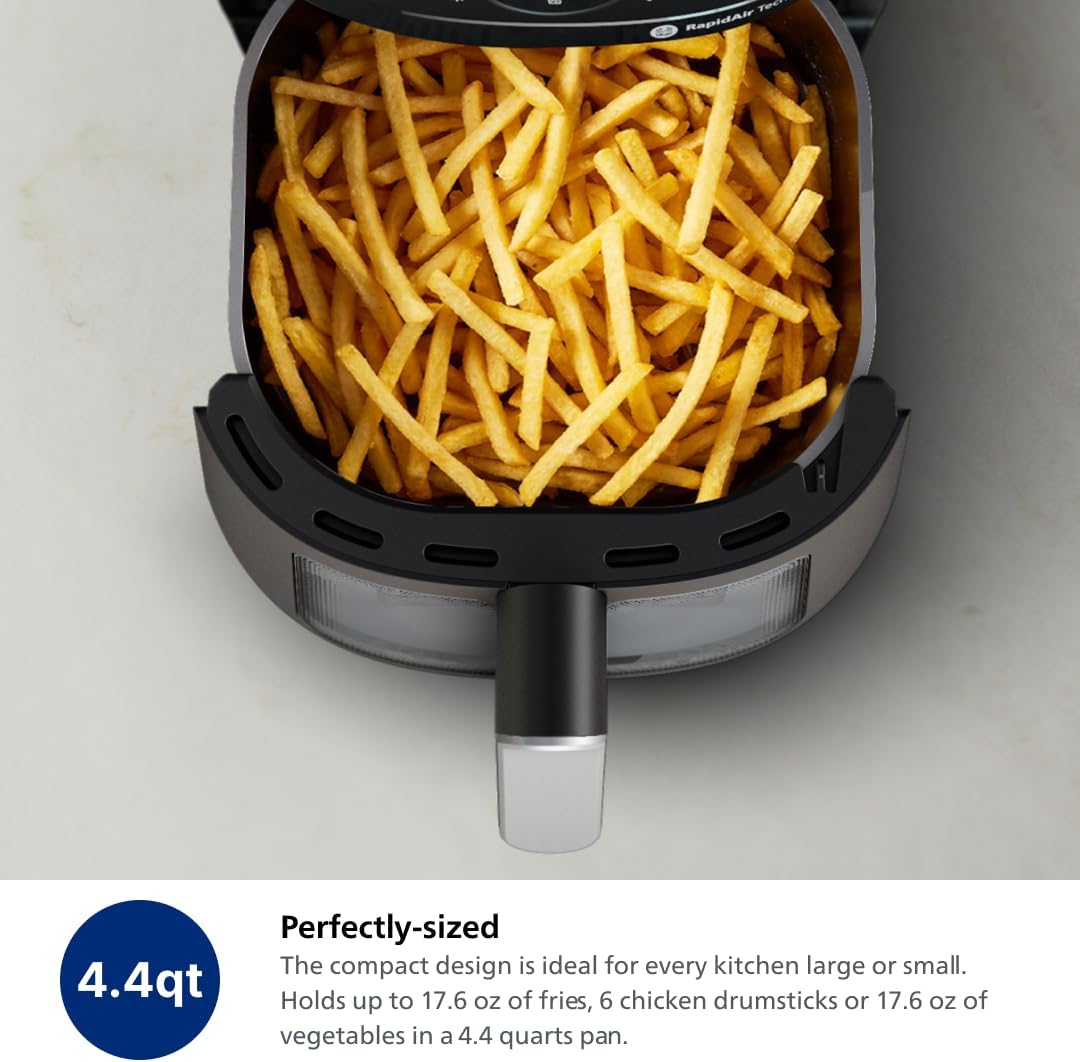
The pan holds a useful volume: Philips cites 28.2 oz of fries, 8 chicken drumsticks, or 28.02 oz of vegetables. For a small household, this is more than adequate; for a larger group, you may need to cook in batches. The capacity is designed to balance interior space with the compact footprint — the machine isn’t trying to be industrial, but it won’t force you into tiny portions either.
Practical packing: how to arrange food for best results
You’ll get the crispiest results when food is arranged in a single layer with little to no overlap. If you pile things, you’ll compromise airflow and texture, and you’ll notice spots that are less crisp. For drumsticks or larger items, it helps to leave small gaps so the hot air can kiss each surface. If you want to do more, stagger your batches rather than overcrowd, and you’ll be rewarded with steadier outcomes.

This image is property of Amazon.com.
Testing it in the real world: specific foods and how they behave
What matters is how your food responds. Below are common dishes you’ll cook frequently and what to expect from this model.
Fries (fresh and frozen)
Fresh-cut fries in this air fryer develop a satisfying crust with minimal oil if you toss them lightly and give them space. For frozen fries, presets often get you close to perfection without preheating; check halfway through for stirring. You’ll enjoy the texture and the speed with which they brown.
Chicken (drumsticks, wings, breasts)
Chicken drums crisp well, the skin rendering and the interior staying moist if you don’t overcook. Wings will come out with pleasantly blistered skin; breasts require attention to avoid dryness — consider slightly lower temperature and a touch longer time. You’ll learn the timing for your preferences, and once you have it, you’ll repeat those settings.
Vegetables and roasting
Vegetables roast quickly and caramelize attractively. Root vegetables might take a little longer; cut them evenly and consider parboiling tough pieces if you want an even finish. You’ll appreciate the vibrant texture and intensified flavor that the air fryer often yields.
Fish and delicate proteins
Fish is possible but more demanding; thin fillets risk drying, and batter can be uneven. For fish, use lower temperatures and watch closely through that cooking window. You’ll find success by treating fish as a precise performance rather than a casual toss-and-forget.
Baking a cake and other unexpected uses
The cake preset suggests the machine’s versatility; an individual cake or small loaf can bake nicely, though you may notice different browning than in a conventional oven. You’ll need appropriate containers that fit the pan, and you’ll enjoy the novelty of using an air fryer for small bakes.
Reheating and defrosting
Reheating is efficient: the air fryer revives crispness that a microwave dulls. Defrosting can be done with caution, using lower temperature settings to prevent partial cooking. You’ll find the machine a go-to for bringing leftovers back to life with texture intact.
Controls, user experience, and daily use
Using this air fryer becomes a small ritual that punctuates your day. The touchscreen and presets simplify habitual tasks, while the cooking window and accessible pan make monitoring and maintenance less annoying. You’ll learn a set of repeatable rhythms that reduce friction in meal prep.
Touchscreen clarity and feedback
The screen provides quick feedback; icons are legible and the menus logical. You won’t need a manual for every interaction, though the manual remains useful for edge cases. You’ll grow comfortable with the interface in a few uses and then rely on it instinctively.
Heating time and preheating
Preheating is sometimes recommended and sometimes optional depending on what you’re cooking. The machine heats quickly compared to conventional ovens, so you won’t spend a long wait before you can begin. You’ll still get better consistency with a brief preheat for certain foods.
Noise and heat around the appliance
It emits a steady hum when operating — not silent, but not intrusive. The exterior gets warm, and the top and vents radiate heat, so you’ll keep it on a heat-tolerant surface with some clearance. The noise and heat are part and parcel of convection cooking; they’re manageable as long as you give it room.
This image is property of Amazon.com.
Cleaning and maintenance: keeping it honest and tidy
Cleaning fits into the cadence of kitchen life. The pan and internal surfaces don’t demand industrial effort, and the design intends to ease the chore of cleaning without being miraculous. You’ll likely clean the pan after most uses and wipe the exterior occasionally, which becomes a quick task once you’ve made it part of the routine.
Removing built-up residue and dealing with oil
Scraping and soaking work for stubborn bits, and the dark interior hides minor marks. You’ll find that regular cleaning prevents buildup, and occasional deeper cleaning keeps performance steady. Use brushes or nonabrasive cloths to protect finishes.
Long-term durability and reliability
Over months of regular use, a durable appliance becomes a familiar object in your kitchen. The Philips unit aims at everyday durability rather than disposability; if you treat it with ordinary care — don’t bang trays, don’t immerse electrical parts — it should remain functional. You’ll extend its life by following basic maintenance rather than expecting industrial toughness.
A clear breakdown: specs, features, and what they mean for you
Below is a concise table to help you see the primary specifications at a glance and why each matters.
| Feature | What it is | Why it matters for you |
|---|---|---|
| Model | Philips Air Fryer 2000 Series (NA231/00) | A specific compact model with a recognizable brand behind it. |
| Capacity | 6.6 quarts | Big enough for small-family meals; requires batches for larger groups. |
| Cooking Window | Built-in viewing window | Lets you monitor progress without losing heat or interrupting cycles. |
| Cooking Functions | 13-in-1 (air fry, bake, grill, roast, reheat, defrost, keep warm, etc.) | Versatile — replaces several appliances or oven tasks in one compact unit. |
| RapidAir Technology | Starfish bottom pattern to improve airflow | Promotes even crisping with minimal oil. |
| Touchscreen Controls | 9 presets + manual settings | User-friendly interface that balances convenience and customization. |
| Example capacities | 28.2 oz fries, 8 drumsticks, 28.02 oz vegetables | Practical examples for portion planning. |
| Color/Finish | Black | Neutral and unobtrusive for most kitchens. |
This image is property of Amazon.com.
Pros, cons, and the small print you’ll want to keep in mind
You’ll want clarity when deciding, so here’s a straightforward list of strengths and limitations.
Pros
- Compact footprint that suits small kitchens and apartments.
- Cooking window lets you monitor without interrupting cycles.
- RapidAir technology yields crispy results with less oil.
- 13-in-1 functionality reduces the need for multiple appliances.
- Touchscreen and presets simplify repetitive cooking.
Cons
- 6.6 quarts is limiting for large gatherings; expect to cook in batches.
- Delicate foods like thin fish or wet-battered items can be challenging.
- The machine is not silent; it produces a steady hum and heat.
- You’ll still need practice to master timing for a few food types.
How it compares to other air fryers and ovens you might consider
You may be choosing between an air fryer of this size, a larger “XL” machine, or leaning on your conventional oven. The Philips 2000 Series offers an intermediate answer: more capability and better crisping than a small portable model, without the bulk of an XL unit. Compared to a conventional oven, you trade volume for speed and energy efficiency in small batches. If you cook large roasts weekly, you’ll prefer a bigger oven; if you mostly cook for one or two and value speed and texture, this model fits nicely.
When a different choice makes sense
If you regularly host a table of six or more, a larger-capacity air fryer or oven makes more sense. If your focus is on baking large loaves or sheets of cookies, a conventional oven will suit those tasks better. You’ll choose this Philips when you want a hybrid of efficiency, compactness, and texture-focused cooking.
This image is property of Amazon.com.
Who should buy this and who should pause
You should consider buying this if you want a reliable kitchen companion that crisps well, conserves counter space, and simplifies everyday cooking. You should pause if you frequently cook for large family gatherings in one go, if you need industrial quantities, or if most of your dishes are fragile, wet-battered pâtisserie that demand a different kind of heat source.
Practical tips, small rituals, and a few tricks you’ll adopt
You’ll find that little adjustments change outcomes dramatically. These tips are the kind you’ll jot down and keep near the machine.
- Preheat for a few minutes when baking or roasting — it stabilizes color and timing.
- Toss fries and vegetables halfway through to ensure even browning.
- Use a light brush of oil for breaded items if you want extra sheen and crunch.
- Don’t overcrowd; cook in batches for consistent crispness.
- Use the cooking window to watch for browning rather than timing alone; color is a trusted sign.
- Insert a small foil tray for particularly juicy items to minimize cleanup, but avoid covering vents.
- For reheating fried foods, use a slightly lower temperature than you think to avoid drying while restoring texture.
Safety considerations you’ll want to remember
This device generates heat and steam like any serious kitchen tool, so treat it with ordinary caution. Keep it on a stable, heat-tolerant surface, and allow clearance around vents. Never submerge the base or get water into the electronics, and handle hot pans with mitts. You’ll feel safer when you give it space and a little respect.
A couple of user scenarios to imagine
- You come home after a long day and want fries and drumsticks ready in under 30 minutes; the Philips will deliver a quick, textured meal with less oil and reduced mess.
- You want to reheat last night’s pizza so it’s crisp again without drying it out; the air fryer will revive the slice with a better chew than a microwave can manage.
Final verdict: honest, in plain language
If you want a compact, capable air fryer that prioritizes crispness and convenience, the Philips Air Fryer 2000 Series (NA231/00) is a thoughtful choice. It’s not a miracle worker for every culinary problem, nor is it meant to be. It’s a pragmatic appliance that improves texture, reduces oil, and fits comfortably on a crowded countertop. You’ll need to accept its capacity limits and learn its timing, but once you do, it becomes the small, reliable instrument you turn to for weekday dinners, quick reheats, and the occasional modest roast.
You’ll find it most rewarding if you prize efficiency and texture and are willing to cook in sensible portions. If you’re looking for a versatile bit of kitchen machinery that quietly changes small habits and improves everyday results, this Philips air fryer is likely to become part of your daily rhythm.
Disclosure: As an Amazon Associate, I earn from qualifying purchases.